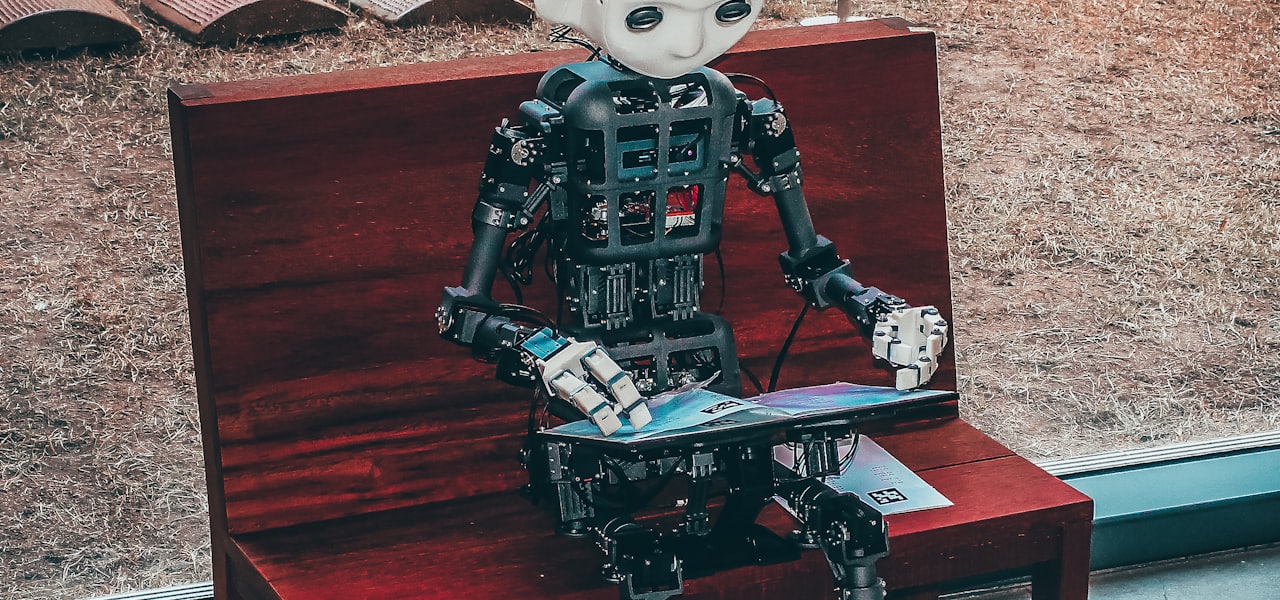
As artificial intelligence (AI) has become more mainstream, there is growing concern about how this will influence elections. Potential targets of AI include election processes, election offices, election officials and election vendors. There are also global efforts to improve elections using AI. == Tactics == Generative AI capabilities allow creation of misleading content. Examples of this include text-to-video, deepfake videos, text-to-image, AI-altered images, text-to-speech, voice cloning, and text-to-text. In the context of an election, a deepfake video of a candidate may propagate information that the candidate does not endorse. Chatbots could spread misinformation related to election locations, times or voting methods. In contrast to malicious actors in the past, these techniques require little technical skill and can spread rapidly. LLM-generated messages have the capacity to persuade humans on political issues. Researchers have begun to investigate how people rate messages that LLMs generate for how persuasive they are. When it came to policy issues, the LLM-generated messages received a 2.91 compared to a 2.80 when it came to smartness between the AI and humans. The LLM-generated messages were often more technical and analytical than human-generated messages. Generative AI has been used to micro-target people during tight political elections. The generation of targeted large language models has triggered concern that they will be used to leverage readily scale microtargeting. Rephrasing inputs have been used to generate fraudulent emails and phishing websites. Rephrasing inputs in a microtargeting does not violate the terms of OpenAI usage. There are no safeguards to prevent the use of rephrasing and creation of fraudulent emails. Political campaign managers have access to this allowing for them to create targeted content. == Usage by country == === Argentina === ==== 2023 elections ==== During the 2023 Argentine primary elections, Javier Milei's team distributed AI generated images including a fabricated image of his rival Sergio Massa and drew 3 million views. The team also created an unofficial Instagram account entitled "AI for the Homeland." Sergio Massa's team also distributed AI generated images and videos. === Bangladesh === ==== 2024 elections ==== In the run up to the 2024 Bangladeshi general election, deepfake videos of female opposition politicians appeared. Rumin Farhana was pictured in a bikini while Nipun Ray was shown in a swimming pool. === Canada === ==== 2025 elections ==== In the run up to the 2025 Canadian federal election, the use of AI tools is likely to figure prominently. India, Pakistan and Iran are all expected to make efforts to subvert the national vote using disinformation campaigns to deceive voters and sway diaspora communities. In a report by the Canadian Centre for Cyber Security called "Cyber Threats to Canada's Democratic Process: 2025 Update", it states that malicious actors including China and Russia: "are most likely to use generative AI as a means of creating and spreading disinformation, designed to sow division among Canadians and push narratives conducive to the interests of foreign states". === France === ==== 2024 elections ==== In the 2024 French legislative election, deepfake videos appeared claiming: i) That they showed the family of Marine le Pen. In the videos, young women, supposedly Le Pen's nieces, are seen skiing, dancing and at the beach "while making fun of France’s racial minorities": However, the family members don't exist. On social media there were over 2 million views. ii) In a video seen on social media, a deepfake video of a France24 broadcast appeared to report that the Ukrainian leadership had "tried to lure French president Emmanuel Macron to Ukraine to assassinate him and then blame his death on Russia". === Ghana === ==== 2024 elections ==== During the months before the December 2024 Ghanaian general election, a network of at least 171 fake accounts has been used to spam social media. Posts have been used by a group identified as "@TheTPatriots" to promote the New Patriotic Party, although it is not known whether the two are connected. All the networks' posts were "highly likely" to have been generated by ChatGPT and appear to be the "first secretly partisan network using AI to influence elections in Ghana". The opposition National Democratic Congress was also criticized with its leader John Mahama being called a drunkard. === India === ==== 2024 elections ==== In the 2024 Indian general election, politicians used deepfakes in their campaign materials. These deepfakes included politicians who had died prior to the election. Mathuvel Karunanidhi's party posted with his likeness even though he had died 2018. A video The All-India Anna Dravidian Progressive Federation party posted showed an audio clip of Jayaram Jayalalithaa even though she had died in 2016. The Deepfakes Analysis Unit (DAU) is an open source platform created in March 2024 for the public to share misleading content and assess if it had been AI-generated. AI was also used to translate political speeches in real time. This translating ability was widely used to reach more voters. === Indonesia === ==== 2024 elections ==== In the 2024 Indonesian presidential election, Prabowo Subianto made extensive use of AI-generated art in his campaign, which ranged from images of himself as an adorable child to various child portrayals in his advertisements. The Indonesian Children's Protection Commission condemned these ads, labeling them as a form of misuse. Other candidates, Anies Baswedan and Ganjar Pranowo, also incorporated AI art into their campaigns. Throughout the election period, all presidential candidates faced attacks from deepfakes, both in video and audio formats. === Ireland === ==== 2024 elections ==== In the last weeks of the 2024 Irish general election a spoof election poster appeared in Dublin featuring "an AI-generated candidate with three arms". The candidate is called Aidan Irwin, but no-one stood in the election with that name. A slogan on the poster says "put matters into artificial intelligence’s hands". The convincing election poster shows a man that "has six fingers on one hand, three arms, and a distorted thumb". === New Zealand === ==== 2023 elections ==== In May 2023, ahead of the 2023 New Zealand general election in October 2023, the New Zealand National Party published a "series of AI-generated political advertisements" on its Instagram account. After confirming that the images were faked, a party spokesperson said that it was "an innovative way to drive our social media". === Pakistan === ==== 2024 elections ==== AI has been used by the imprisoned ex-Prime Minister Imran Khan and his media team in the 2024 Pakistani general election: i) An AI generated audio of his voice was added to a video clip and was broadcast at a virtual rally. ii) An op-ed in The Economist written by Khan was later claimed by himself to have been written by AI which was later denied by his team. The article was liked and shared on social media by thousands of users. === South Africa === ==== 2024 elections ==== In the 2024 South African general election, there were several uses of AI content: i) A deepfaked video of Joe Biden emerged on social media showing him saying that "The U.S. would place sanctions on SA and declare it an enemy state if the African National Congress (ANC) won". ii) In a deepfake video, Donald Trump was shown endorsing the uMkhonto weSizwe party. It was posted to social media and was viewed more than 158,000 times. iii) Less than 3 months before the elections, a deepfake video showed U.S. rapper Eminem endorsing the Economic Freedom Fighters party while criticizing the ANC. The deepfake was viewed on social media more than 173,000 times. === South Korea === ==== 2022 elections ==== In the 2022 South Korean presidential election, a committee for one presidential candidate Yoon Suk Yeol released an AI avatar 'Al Yoon Seok-yeol' that would campaign in places the candidate could not go. The other presidential candidate Lee Jae-myung introduced a chatbot that provided information about the candidate's pledges. ==== 2024 elections ==== Deepfakes were used to spread misinformation before the 2024 South Korean legislative election with one source reporting 129 deepfake violations of election laws within a two week period. Seoul hosted the 2024 Summit for Democracy, a virtual gathering of world leaders initiated by US President Joe Biden in 2021. The focus of the summit was on digital threats to democracy including artificial intelligence and deepfakes. === Taiwan === ==== 2024 elections ==== AI-generated content was used during the 2024 Taiwanese presidential election. Among the media were: i) A deepfake video of General Secretary of the Chinese Communist Party Xi Jinping which showed him supporting the presidential elections. Created on social media, the video was "widely circulated
Virtual intelligence
Virtual intelligence (VI) is the term given to artificial intelligence that exists within a virtual world. Many virtual worlds have options for persistent avatars that provide information, training, role-playing, and social interactions. The immersion in virtual worlds provides a platform for VI beyond the traditional paradigm of past user interfaces (UIs). What Alan Turing established as a benchmark for telling the difference between human and computerized intelligence was devoid of visual influences. With today's VI bots, virtual intelligence has evolved past the constraints of past testing into a new level of the machine's ability to demonstrate intelligence. The immersive features of these environments provide nonverbal elements that affect the realism provided by virtually intelligent agents. Virtual intelligence is the intersection of these two technologies: Virtual environments: Immersive 3D spaces provide for collaboration, simulations, and role-playing interactions for training. Many of these virtual environments are currently being used for government and academic projects, including Second Life, VastPark, Olive, OpenSim, Outerra, Oracle's Open Wonderland, Duke University's Open Cobalt, and many others. Some of the commercial virtual worlds are also taking this technology into new directions, including the high-definition virtual world Blue Mars. Artificial intelligence (AI): AI is a branch of computer science that aims to create intelligent machines capable of performing tasks that typically require human intelligence. VI is a type of AI that operates within virtual environments to simulate human-like interactions and responses. == Applications == Cutlass Bomb Disposal Robot: Northrop Grumman developed a virtual training opportunity because of the prohibitive real-world cost and dangers associated with bomb disposal. By replicating a complicated system without having to learn advanced code, the virtual robot has no risk of damage, trainee safety hazards, or accessibility constraints. MyCyberTwin: NASA is among the companies that have used the MyCyberTwin AI technologies. They used it for the Phoenix rover in the virtual world Second Life. Their MyCyberTwin used a programmed profile to relay information about what the Phoenix rover was doing and its purpose. Second China: The University of Florida developed the "Second China" project as an immersive training experience for learning how to interact with the culture and language in a foreign country. Students are immersed in an environment that provides role-playing challenges coupled with language and cultural sensitivities magnified during country-level diplomatic missions or during times of potential conflict or regional destabilization. The virtual training provides participants with opportunities to access information, take part in guided learning scenarios, communicate, collaborate, and role-play. While China was the country for the prototype, this model can be modified for use with any culture to help better understand social and cultural interactions and see how other people think and what their actions imply. Duke School of Nursing Training Simulation: Extreme Reality developed virtual training to test critical thinking with a nurse performing trained procedures to identify critical data to make decisions and performing the correct steps for intervention. Bots are programmed to respond to the nurse's actions as the patient with their conditions improving if the nurse performs the correct actions.
Webometrics
The science of webometrics (also referred to as cybermetrics) aims to quantify the World Wide Web to get knowledge about the number and types of hyperlinks, the structure of the World Wide Web, and using patterns. According to Björneborn and Ingwersen, the definition of webometrics is "the study of the quantitative aspects of the construction and use of information resources, structures and technologies on the Web drawing on bibliometric and informetric approaches." The term webometrics was coined by Almind and Ingwersen (1997). A second definition of webometrics has also been introduced, "the study of web-based content with primarily quantitative methods for social science research goals using techniques that are not specific to one field of study", which emphasizes the development of applied methods for use in the wider social sciences. The purpose of this alternative definition was to help publicize appropriate methods outside the information-science discipline rather than to replace the original definition within information science. Similar scientific fields are: bibliometrics, informetrics, scientometrics, virtual ethnography, and web mining. One relatively straightforward measure is the "web impact factor" (WIF) introduced by Ingwersen (1998). The WIF measure may be defined as the number of web pages in a web site receiving links from other web sites, divided by the number of web pages published in the site that are accessible to the crawler. However, the use of WIF has been disregarded due to the mathematical artifacts derived from power law distributions of these variables. Other similar indicators using size of the institution instead of number of webpages have been proved more useful.
Conceptions of Library and Information Science
Conceptions of Library and Information Science (CoLIS) is a series of conferences about historical, empirical and theoretical perspectives in Library and Information Science. == CoLIS conferences == CoLIS 1 1991 in Tampere, Finland CoLIS 2 1996 in Copenhagen, Denmark CoLIS 3 1999 in Dubrovnik, Croatia CoLIS 4 2002 in Seattle, US CoLIS 5 2005 in Glasgow, Scotland CoLIS 6 2007 in Borås, Sweden CoLIS 7 June 2010 in London, at City University London. CoLIS 8 August 19–22, 2013, in Copenhagen, Denmark, at The Royal School of Library and Information Science. CoLIS 9 June 27–29, 2016, in Uppsala, Sweden, at Uppsala University. CoLIS 10 June 16–19, 2019, in Ljubljana, Slovenia, Faculty of Arts CoLIS 11 May 29–June 1, 2022, in Oslo, Norway, Oslo Metropolitan University.
Emotion recognition
Emotion recognition is the process of identifying human emotion. People vary widely in their accuracy at recognizing the emotions of others. Use of technology to help people with emotion recognition is a relatively nascent research area. Generally, the technology works best if it uses multiple modalities in context. To date, the most work has been conducted on automating the recognition of facial expressions from video, spoken expressions from audio, written expressions from text, and physiology as measured by wearables. == Human == Humans show a great deal of variability in their abilities to recognize emotion. A key point to keep in mind when learning about automated emotion recognition is that there are several sources of "ground truth", or truth about what the real emotion is. Suppose we are trying to recognize the emotions of Alex. One source is "what would most people say that Alex is feeling?" In this case, the 'truth' may not correspond to what Alex feels, but may correspond to what most people would say it looks like Alex feels. For example, Alex may actually feel sad, but he puts on a big smile and then most people say he looks happy. If an automated method achieves the same results as a group of observers it may be considered accurate, even if it does not actually measure what Alex truly feels. Another source of 'truth' is to ask Alex what he truly feels. This works if Alex has a good sense of his internal state, and wants to tell you what it is, and is capable of putting it accurately into words or a number. However, some people are alexithymic and do not have a good sense of their internal feelings, or they are not able to communicate them accurately with words and numbers. In general, getting to the truth of what emotion is actually present can take some work, can vary depending on the criteria that are selected, and will usually involve maintaining some level of uncertainty. == Automatic == Decades of scientific research have been conducted developing and evaluating methods for automated emotion recognition. There is now an extensive literature proposing and evaluating hundreds of different kinds of methods, leveraging techniques from multiple areas, such as signal processing, machine learning, computer vision, and speech processing. Different methodologies and techniques may be employed to interpret emotion such as Bayesian networks. , Gaussian Mixture models and Hidden Markov Models and deep neural networks. === Approaches === The accuracy of emotion recognition is usually improved when it combines the analysis of human expressions from multimodal forms such as texts, physiology, audio, or video. Different emotion types are detected through the integration of information from facial expressions, body movement and gestures, and speech. The technology is said to contribute in the emergence of the so-called emotional or emotive Internet. The existing approaches in emotion recognition to classify certain emotion types can be generally classified into three main categories: knowledge-based techniques, statistical methods, and hybrid approaches. ==== Knowledge-based techniques ==== Knowledge-based techniques (sometimes referred to as lexicon-based techniques), utilize domain knowledge and the semantic and syntactic characteristics of text and potentially spoken language in order to detect certain emotion types. In this approach, it is common to use knowledge-based resources during the emotion classification process such as WordNet, SenticNet, ConceptNet, and EmotiNet, to name a few. One of the advantages of this approach is the accessibility and economy brought about by the large availability of such knowledge-based resources. A limitation of this technique on the other hand, is its inability to handle concept nuances and complex linguistic rules. Knowledge-based techniques can be mainly classified into two categories: dictionary-based and corpus-based approaches. Dictionary-based approaches find opinion or emotion seed words in a dictionary and search for their synonyms and antonyms to expand the initial list of opinions or emotions. Corpus-based approaches on the other hand, start with a seed list of opinion or emotion words, and expand the database by finding other words with context-specific characteristics in a large corpus. While corpus-based approaches take into account context, their performance still vary in different domains since a word in one domain can have a different orientation in another domain. ==== Statistical methods ==== Statistical methods commonly involve the use of different supervised machine learning algorithms in which a large set of annotated data is fed into the algorithms for the system to learn and predict the appropriate emotion types. Machine learning algorithms generally provide more reasonable classification accuracy compared to other approaches, but one of the challenges in achieving good results in the classification process, is the need to have a sufficiently large training set. Some of the most commonly used machine learning algorithms include Support Vector Machines (SVM), Naive Bayes, and Maximum Entropy. Deep learning, which is under the unsupervised family of machine learning, is also widely employed in emotion recognition. Well-known deep learning algorithms include different architectures of Artificial Neural Network (ANN) such as Convolutional Neural Network (CNN), Long Short-term Memory (LSTM), and Extreme Learning Machine (ELM). The popularity of deep learning approaches in the domain of emotion recognition may be mainly attributed to its success in related applications such as in computer vision, speech recognition, and Natural Language Processing (NLP). ==== Hybrid approaches ==== Hybrid approaches in emotion recognition are essentially a combination of knowledge-based techniques and statistical methods, which exploit complementary characteristics from both techniques. Some of the works that have applied an ensemble of knowledge-driven linguistic elements and statistical methods include sentic computing and iFeel, both of which have adopted the concept-level knowledge-based resource SenticNet. The role of such knowledge-based resources in the implementation of hybrid approaches is highly important in the emotion classification process. Since hybrid techniques gain from the benefits offered by both knowledge-based and statistical approaches, they tend to have better classification performance as opposed to employing knowledge-based or statistical methods independently. A downside of using hybrid techniques however, is the computational complexity during the classification process. === Datasets === Data is an integral part of the existing approaches in emotion recognition and in most cases it is a challenge to obtain annotated data that is necessary to train machine learning algorithms. For the task of classifying different emotion types from multimodal sources in the form of texts, audio, videos or physiological signals, the following datasets are available: HUMAINE: provides natural clips with emotion words and context labels in multiple modalities Belfast database: provides clips with a wide range of emotions from TV programs and interview recordings SEMAINE: provides audiovisual recordings between a person and a virtual agent and contains emotion annotations such as angry, happy, fear, disgust, sadness, contempt, and amusement IEMOCAP: provides recordings of dyadic sessions between actors and contains emotion annotations such as happiness, anger, sadness, frustration, and neutral state eNTERFACE: provides audiovisual recordings of subjects from seven nationalities and contains emotion annotations such as happiness, anger, sadness, surprise, disgust, and fear DEAP: provides electroencephalography (EEG), electrocardiography (ECG), and face video recordings, as well as emotion annotations in terms of valence, arousal, and dominance of people watching film clips DREAMER: provides electroencephalography (EEG) and electrocardiography (ECG) recordings, as well as emotion annotations in terms of valence, dominance of people watching film clips MELD: is a multiparty conversational dataset where each utterance is labeled with emotion and sentiment. MELD provides conversations in video format and hence suitable for multimodal emotion recognition and sentiment analysis. MELD is useful for multimodal sentiment analysis and emotion recognition, dialogue systems and emotion recognition in conversations. MuSe: provides audiovisual recordings of natural interactions between a person and an object. It has discrete and continuous emotion annotations in terms of valence, arousal and trustworthiness as well as speech topics useful for multimodal sentiment analysis and emotion recognition. UIT-VSMEC: is a standard Vietnamese Social Media Emotion Corpus (UIT-VSMEC) with about 6,927 human-annotated sentences with six emotion labels, contributing to emotion recognition research in Vietnamese
Threat actor
In cybersecurity and risk assessment, a threat actor (or threat agents, attackers, or adversaries) is a person, group, organisation, state, or other entity with the ability to cause, carry, transmit, support, or exploit a threat. Threat actors are commonly analysed according to their motivations, resources, technical capability, access to systems, relationship to a target, and degree of connection to state authority. They may exploit vulnerabilities, conduct social engineering, steal or monetise data, disrupt operations, or support other actors who carry out such activity. Because the term covers a wide range of actors, researchers and security organisations use taxonomies that distinguish between groups such as cybercriminals, state-linked actors, ideologically motivated actors, thrill seekers or trolls, insiders, and competitors. Threat actor classifications are used in risk management, cyber threat intelligence, and incident response to connect observed behaviour with possible objectives and likely future activity. The categories are not always mutually exclusive: the same actor may combine criminal, ideological, commercial, or state-linked motivations, and different organisations may use different names for similar actors. == Risk assessment and security management == In risk assessment, threat actor analysis is used to identify who or what may create, carry, transmit, support, or exploit a threat, and how that actor relates to the system being assessed. Rausand and Haugen classify threat actors by their relationship to the system, distinguishing between internal and external actors, and by intent, distinguishing between intentional and unintentional actors. Threat actor classification may also support incident investigation. Rogers argued that actor categories could be inferred from observable case points, such as tools used, messages left, data targeted, forensic knowledge, and the degree of damage, allowing investigators to assess likely motivation and skill level. Later work similarly linked actor classification to operational analysis. Chng, Lu, Kumar and Yau proposed a framework connecting hacker types, motivations and typical strategies, arguing that observed behaviour before or during an attack can help analysts infer the likely type of actor involved. At the strategic level, actor analysis may consider an actor's resources, capabilities, degree of state involvement, motivations and objectives. == Landscape == The United Nations Institute for Disarmament Research has described the contemporary cyberthreat landscape as involving an increasingly diverse and interconnected set of actors, including state-led operations, cybercriminal syndicates, ideological hacktivists, commercial cyber mercenaries, private companies and civilian volunteers. Its 2026 report argued that these actors vary in resources, technical sophistication and relationships with states, making it traditional distinctions between state, civilian combatant roles, and legitimate and illegitimate conduct harder to apply. == Academic taxonomies == Early taxonomies classified hackers by activity, skill, motivation, or criminal profile. Landreth proposed six categories based on activity: novice, student, tourist, crasher, and thief. Hollinger classified computer misuse into pirates, browsers, and crackers, describing a progression from less-skilled activity to more technically serious offences. Chantler used attributes including activity, skill, knowledge, motivation, and duration of involvement to distinguish between an elite group, neophytes, and "losers and lamers". Parker proposed seven profiles of cybercriminals: pranksters, hacksters, malicious hackers, personal problem solvers, career criminals, extreme advocates, and malcontents, addicts, and irrational or incompetent people. In 2000, Marc Rogers proposed a taxonomy of hackers with seven, non-mutually-exclusive categories: newbie/tool kit users, cyber-punks, internals, coders, old guard hackers, professional criminals, and cyber-terrorists. Rausand and Haugen distinguish between internal and external threat actors, and between intentional and unintentional threat actors. Internal actors have some relationship with, access to, or position inside the system or organisation, while external actors operate from outside it. Intentional actors seek to create, exploit, or support a threat event, whereas unintentional actors may cause or enable a threat event through error, negligence, accident, or lack of awareness. Rogers later revised his hacker taxonomy into Novices, Cyber-punks, Internals, Petty Thieves, Virus Writers, Old Guard hackers, Professional Criminals, Information Warriors, and, more tentatively, Political Activists. In the model, motivation is grouped into four broad domains: curiosity, notoriety, revenge, and financial gain. A 2022 review by Chng, Lu, Kumar and Yau examined 11 hacker typologies published over three decades and proposed a unified framework linking hacker types, motivations, and strategies. The framework identified 13 hacker types and seven motivations, and argued that observed strategies during an attack can help analysts infer the likely type of actor involved. == Government taxonomies == Taxonomies of threat actors by governments are much more likely to include state-level threat actors. In the United States the National Institute of Standards and Technology (NIST) uses the term threat source in its risk-assessment guidance: organisations are directed to identify and characterise threat sources of concern, including capability, intent and targeting for adversarial threat sources, and the range of effects for non-adversarial threat sources. NIST treats threat-source identification as part of the risk-assessment process, alongside identifying threat events, vulnerabilities, likelihood and impact. In the EU, European Union Agency for Cybersecurity publishes the annual ENISA Threat Landscape, which analyses cyber incidents and adversary behaviour affecting the European Union. The 2025 report analysed selected incidents from the previous year and grouped activity around cybercrime, state-aligned activity, foreign information manipulation and interference, and hacktivism. In ENISA's 2025 analysis, hacktivist activity dominated reporting, representing almost 80% of recorded incidents and consisting mainly of low-level distributed denial-of-service operations. ENISA also reported increasing convergence between hacktivism, cybercrime and state-nexus activity, including state-aligned use of hacktivist personas, hacktivist adoption of ransomware, and false-flag or impersonation activity. At the UN level, A 2026 report by the United Nations Institute for Disarmament Research described the cyberthreat landscape as involving state-led operations, cybercriminal syndicates, ideological hacktivists, commercial cyber mercenaries, and civilian volunteers, with actors varying in resources, technical sophistication, and links to states. Canada defines threat actors as states, groups, or individuals who aim to cause harm by exploiting a vulnerability with malicious intent. A threat actor must be trying to gain access to information systems to access or alter data, devices, systems, or networks. The Japanese government's National Centre of Incident Readiness and Strategy (NISC) was established in 2015 to create a "free, fair and secure cyberspace" in Japan. The NICS created a cybersecurity strategy in 2018 that outlines nation-states and cybercrime to be some of the most key threats. It also indicates that terrorist usage of the cyberspace needs to be monitored and understood. The Security Council of the Russian Federation published the cyber security strategy doctrine in 2016. This strategy highlights the following threat actors as a risk to cyber security measures: nation-state actors, cyber criminals, and terrorists. == Techniques == Threat actors use techniques like Social engineering (security), and Phishing, alongside technical exploits like Cross-site scripting, SQL injection, and denial-of-service attacks. == Limitations == In practice, actor categories may overlap (Edward Snowden for example), and the same activity may combine features associated with hacktivism, cybercrime and state-linked operations. The lines between hacktivism, cybercrime and state-nexus activity had continued to blur, with shared toolsets, overlapping methods, fake personas, hacktivist adoption of ransomware, and cybercriminal or state-linked actors masquerading as other groups. Threat actor analysis also has limits as a risk-management method. NIST notes that risk assessments depend on their purpose, scope, assumptions, constraints, information sources, risk model and analytic approach, and that assessments are tied to particular time frames and organisational contexts. NIST also warns that simple threat-vulnerability pairing may be undesirable or problematic where there are many threats and vulnerabilities, and recom
Data drilling
Data drilling (also drilldown) refers to any of various operations and transformations on tabular, relational, and multidimensional data. The term has widespread use in various contexts, but is primarily associated with specialized software designed specifically for data analysis. == Common data drilling operations == There are certain operations that are common to applications that allow data drilling. Among them are: Query operations: tabular query pivot query === Tabular query === Tabular query operations consist of standard operations on data tables. Among these operations are: search sort filter (by value) filter (by extended function or condition) transform (e.g., by adding or removing columns) Consider the following example: Fred and Wilma table (Fig 001): gender, fname, lname, home male, fred, chopin, Poland male, fred, flintstone, bedrock male, fred, durst, usa female, wilma, flintstone, bedrock female, wilma, rudolph, usa female, wilma, webb, usa male, fred, johnson, usa The preceding is an example of a simple flat file table formatted as comma-separated values. The table includes first name, last name, gender and home country for various people named fred or wilma. Although the example is formatted this way, it is important to emphasize that tabular query operations (as well as all data drilling operations) can be applied to any conceivable data type, regardless of the underlying formatting. The only requirement is that the data be readable by the software application in use. === Pivot query === A pivot query allows multiple representations of data according to different dimensions. This query type is similar to tabular query, except it also allows data to be represented in summary format, according to a flexible user-selected hierarchy. This class of data drilling operation is formally, (and loosely) known by different names, including crosstab query, pivot table, data pilot, selective hierarchy, intertwingularity and others. To illustrate the basics of pivot query operations, consider the Fred and Wilma table (Fig 001). A quick scan of the data reveals that the table has redundant information. This redundancy could be consolidated using an outline or a tree structure or in some other way. Moreover, once consolidated, the data could have many different alternate layouts. Using a simple text outline as output, the following alternate layouts are all possible with a pivot query: Summarize by gender (Fig 001): female flintstone, wilma rudolph, wilma webb, wilma male chopin, fred flintstone, fred durst, fred johnson, fred (Dimensions = gender; Tabular fields = lname, fname;) Summarize by home, lname (Fig 001): bedrock flintstone fred wilma Poland chopin fred usa ... (Dimensions = home, lname; Tabular fields = fname;) ==== Uses ==== Pivot query operations are useful for summarizing a corpus of data in multiple ways, thereby illustrating different representations of the same basic information. Although this type of operation appears prominently in spreadsheets and desktop database software, its flexibility is arguably under-utilized. There are many applications that allow only a 'fixed' hierarchy for representing data, and this represents a substantial limitation. == Drillup == Drillup is the opposite of drilldown. For example, if you drilldown to see the revenue of one product, then you might want to drillup to see the revenue of all products.